The Wrist Roller That Builds Forearms You Can See
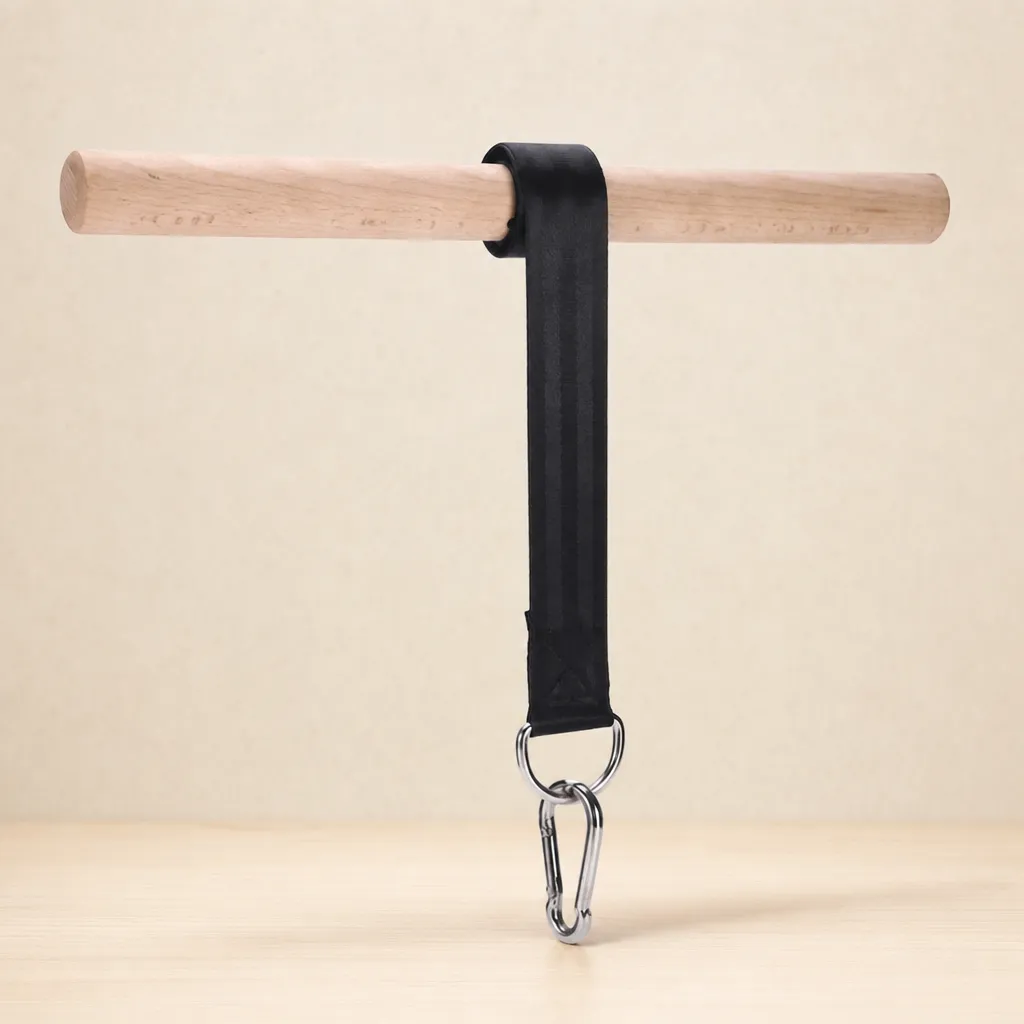
One solid wood handle, one heavy-duty strap, one carabiner. Clip on a plate, roll it up, and your forearms do every inch of the work.
✓ Free shipping ✓ 30-day money-back guarantee
Curls will not fix weak forearms. Rolling will.
Forearms are stubborn. They assist in every pull day and every carry, so they are used to constant work and shrug off half-hearted volume. Most lifters attack them with a few sets of wrist curls at the end of a session, in a short range of motion, with momentum doing a third of the job. The result is the classic mismatch: a solid upper arm sitting on a wrist that looks and performs two sizes smaller.
The wrist roller solves this with brutal simplicity. You hold a wooden bar at shoulder height, and every rotation of your wrists winds a strap loaded with real weight. There is nowhere to hide. Your flexors fire to roll the weight up, your extensors fight to roll it back down, and your fingers grip the handle from the first second to the last. Buyers on our supplier's page describe the build the same way we found it: solid, well finished, and stronger than its price suggests.
It is also the rare forearm tool that respects your schedule. A complete session is three to five rolls up and down. That is under ten minutes, twice a week, for a body part you otherwise train with leftovers. Climbers use it for finger endurance, arm wrestlers for wrist stability, and lifters because a stronger grip carries over to every deadlift, row and pull-up they do.
There is a reason the design has not changed in a hundred years of gym history. A bar, a strap and a weight leave nothing to break, nothing to adjust and nothing to update. The version you are looking at swaps the old rope-through-a-hole construction for a stitched strap loop and a steel carabiner, which removes the two classic failure points of homemade rollers, and keeps everything else exactly as simple as it always was. You will not outgrow it either: the same handle that starts you at 2.5 lb is the one grip athletes load past 25.
Three reasons this roller earns its spot
A wood handle your hands can live on
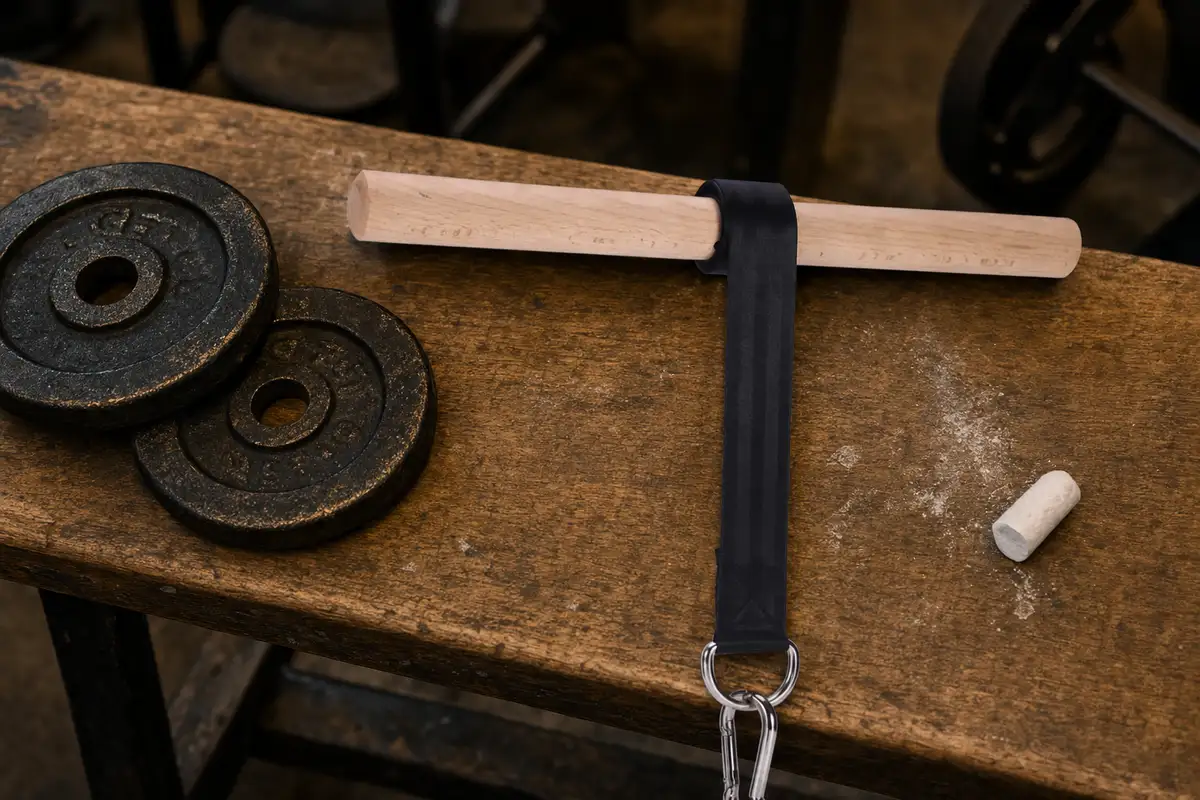
The 15.7 in (40 cm) solid wood handle is smooth on the skin, warm in a cold garage, and wide enough for a full two-hand grip.
Knurled steel rollers chew up your palms long before your forearms are done. Wood grips well without tearing skin, so the set ends when your muscles fail, not when your hands give up.
Loads whatever you already own
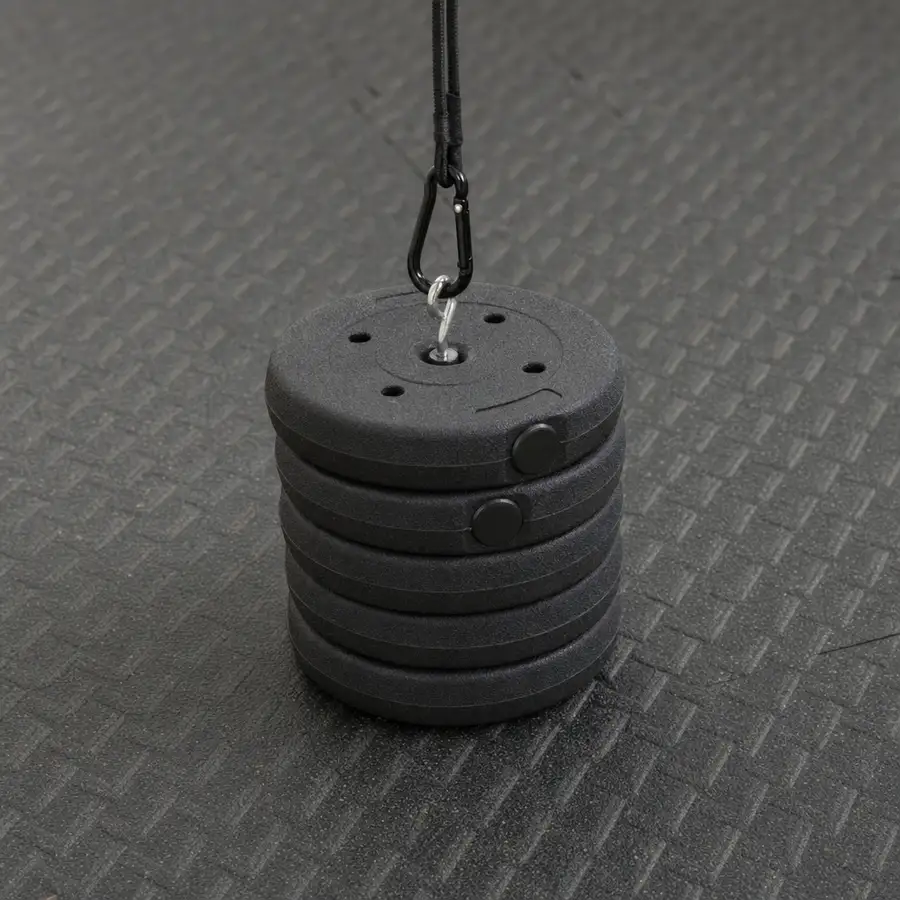
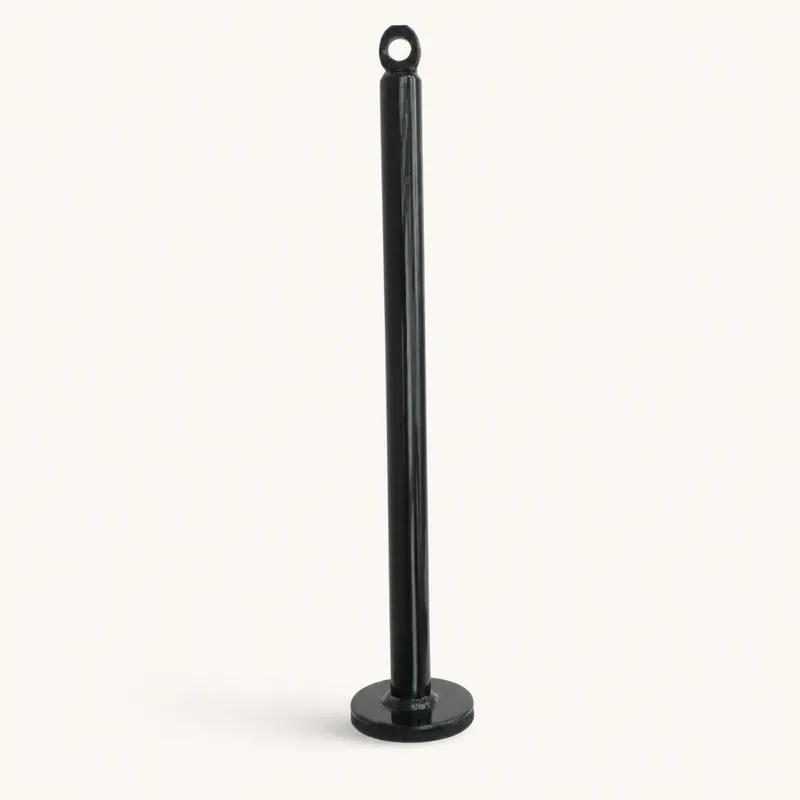
The thickened nylon strap ends in a steel D-ring and carabiner. Clip on a loading pin with plates, a kettlebell, a dumbbell, or any weight with a handle.
No proprietary attachments and no minimum plate size. Start with 2.5 lb, grow to whatever your wrists can take, and swap loads in seconds between sets.
No mount, no rack, no excuses
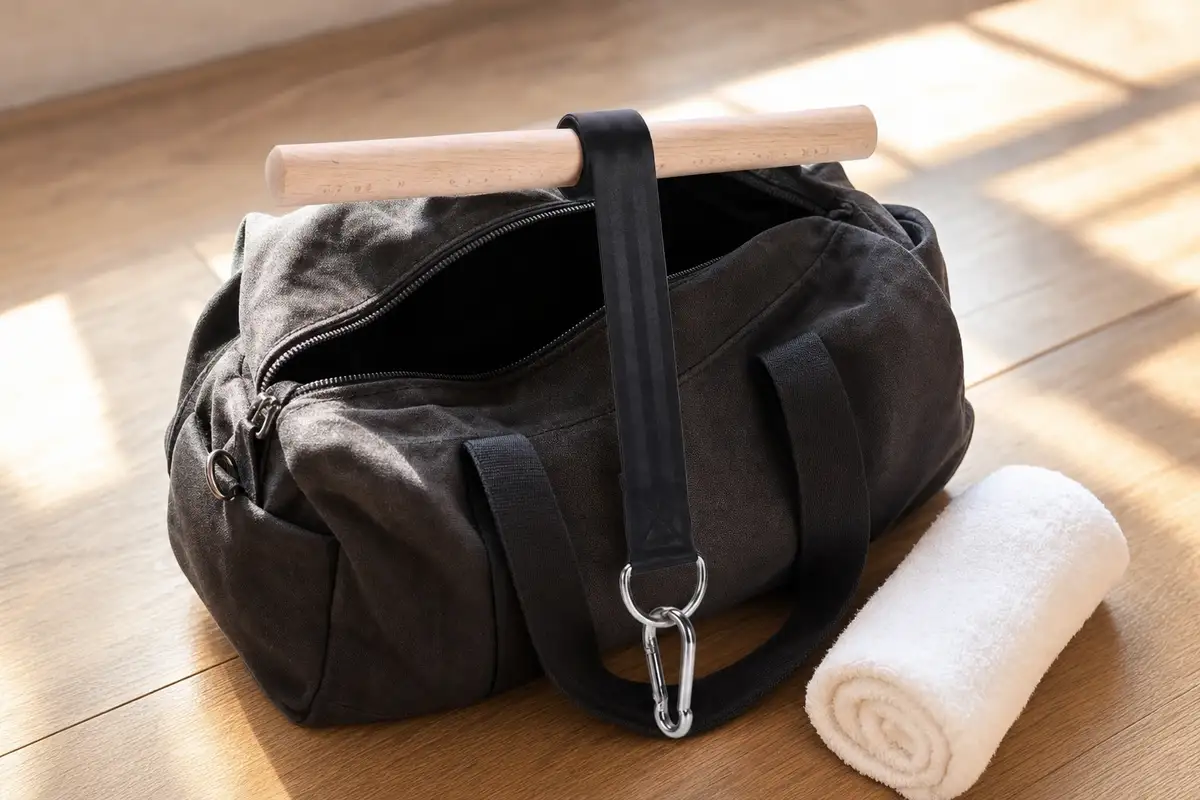
This is a freestanding roller: pick it up, load it, roll. It stores in a drawer or a gym bag and needs zero installation.
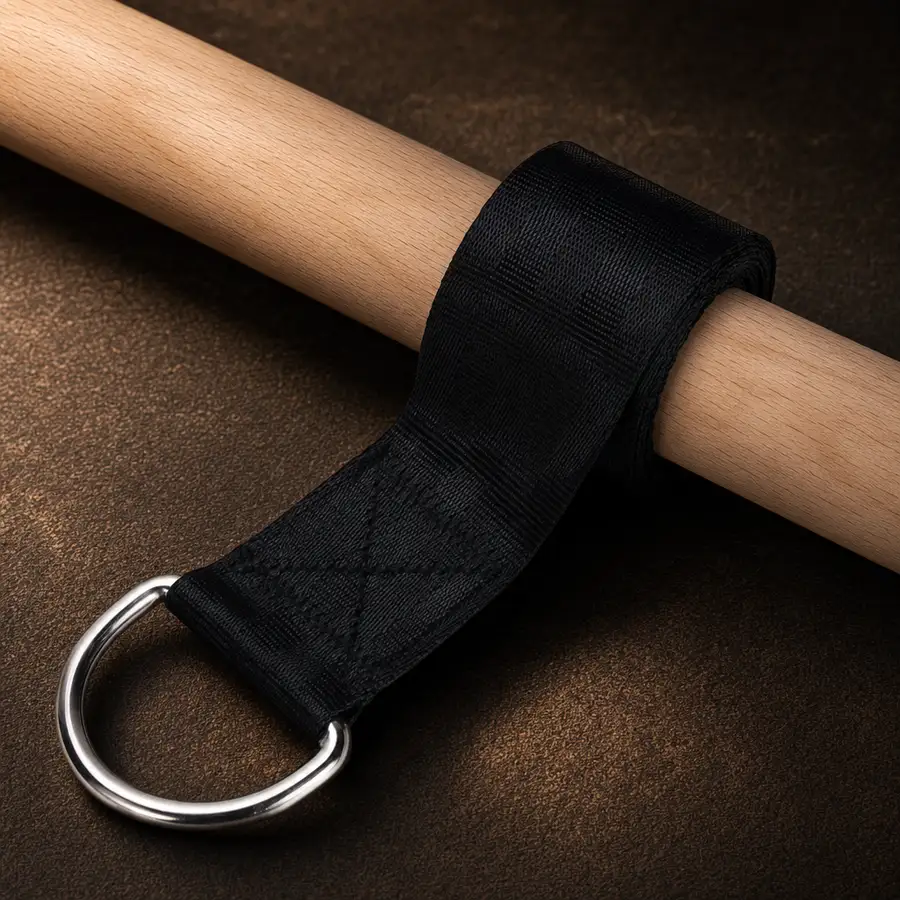
Train in the garage, at the gym, or in a hotel room with a loaded backpack clipped to the strap. The cross-stitched strap loop slides over the bar and stays put under load.
What to load, from first roll to Popeye territory
Most wrist roller guides tell you to "start light" and stop there. We built an actual progression ladder for this roller, based on the leverage of its 15.7 in handle. Find your level, run it twice a week, and move up one rung when you complete every set with slow, controlled lowering.
| Level | Load on the carabiner | Protocol, 2x per week |
|---|---|---|
| First week | Empty strap, then 2.5 lb | 3 rolls up and down, palms over |
| Beginner | 5 lb | 3 rolls each direction, 90 s rest |
| Intermediate | 10-15 lb | 4 rolls, alternate palms over and under |
| Advanced | 20-25 lb | 5 rolls, add a 10 s hold at the top |
| Grip athlete | 25 lb and up | Slow eccentrics only, 5 s per rotation |
Grip strength is not cosmetic
higher all-cause mortality risk associated with every 5 kg (11 lb) decrease in grip strength
— Leong et al., PURE study, The Lancet, 2015
of muscle-strengthening activity per week recommended for all adults
— U.S. Physical Activity Guidelines, HHS, 2018
adults across 17 countries followed in the study that made grip strength a headline health marker
— PURE study, The Lancet, 2015
How a wrist roller stacks up against other forearm tools
| Tool | What it trains | Range and tension | Typical price |
|---|---|---|---|
| Wrist roller | Flexors, extensors, grip endurance | Full range, constant tension both directions | $29.99 here |
| Wrist curl bar | Flexors mostly | Short range, tension drops at the bottom | Varies by plate setup |
| Hand grippers | Crushing grip, fingers | Single squeeze, no extension work | Usually under $30 |
| DIY dowel + rope | Same pattern, less securely | Depends entirely on your knots | Cost of hardware parts |
Premium steel rollers exist and they are excellent, but they are priced for commercial gyms: IronMind's knurled steel One Wicked Wrist Roller lists at $109.95 on their official store (ironmind-store.com, 2026). A wood-handled roller does the same movement for your forearms at a fraction of that, and your palms will thank you for skipping the knurling.
The DIY route deserves its honest mention too: a dowel, a rope and a drilled hole will roll. Our build guide explains exactly how, along with the three places homemade versions fail, which happen to be the three parts this one replaces with stitched webbing and steel.
"Grip strength could be an easy and inexpensive test to assess an individual's risk of death and cardiovascular disease."— Dr. Darryl Leong, McMaster University, lead author of the PURE grip-strength study, The Lancet, 2015
Choose your setup
Everything else you want to know
How to use a wrist roller properly
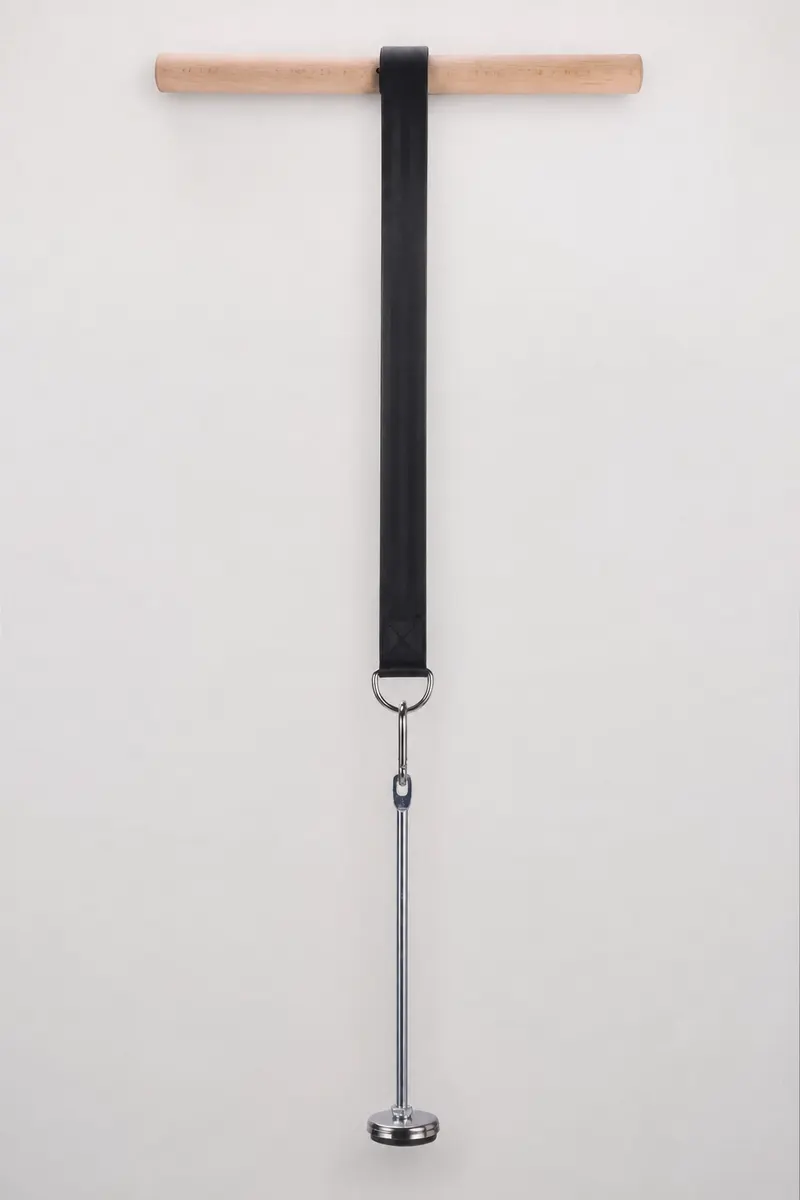
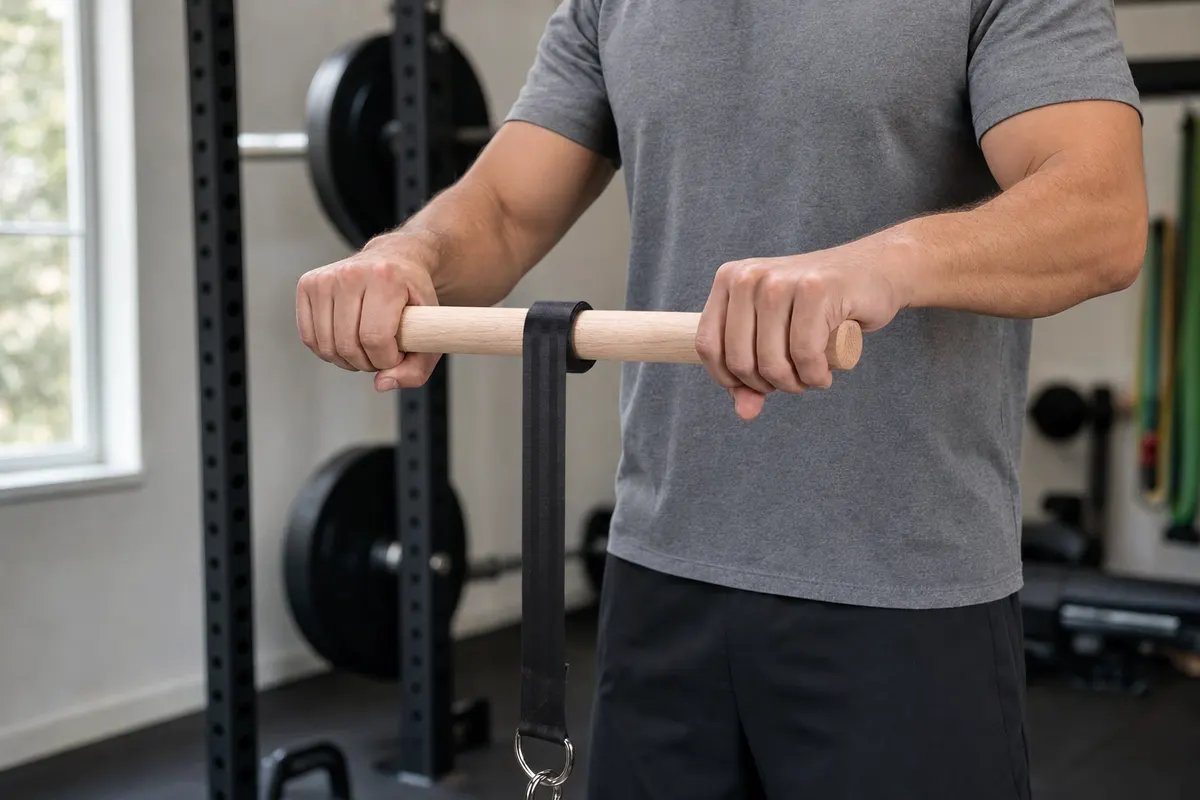
Stand tall and hold the handle at shoulder height with both palms facing down. The strap hangs in the middle with your weight clipped to the carabiner. Roll one wrist over the other, hand over hand, so the strap winds around the bar and the weight climbs toward your hands. Keep your elbows soft and resist the urge to shrug the weight up with your shoulders: the movement should come from your wrists, not your traps.
When the weight reaches the top, reverse it. Unwind slowly, letting the plate descend one controlled rotation at a time. This lowering half is where much of the growth happens, because the extensors and flexors are fighting the weight the entire way down. Dropping it fast wastes half the set.
Alternate your grip between sessions. Palms down emphasizes the extensors on top of your forearm, and palms up shifts work to the flexors underneath. If shoulder fatigue ends your sets before your forearms are done, bend your elbows to 90 degrees and tuck them against your ribs, or rest your forearms on a bench. The forearm work stays identical, the shoulders drop out of the equation.
Program it like a finisher: three to five full up-and-down rolls at the end of a pull day, or as its own ten-minute session two or three times a week. Grip work responds to frequency more than to marathon sessions, and your wrists will let you know if you overdo it. Start with the ladder above, and when in doubt, go lighter and slower.
Storage and care are the short chapter: wipe the wood down if your gym is humid, check the carabiner gate closes cleanly before heavy sets, and keep the strap away from anything that cuts. That is the entire maintenance schedule. Where a knurled steel roller wants chalk and rust prevention, wood wants to be left alone, and the roller lives happily in a drawer, a gym bag or the trunk of a car between sessions.
Specifications
| Handle | Solid wood, 15.7 in (40 cm) long |
| Strap | Thickened nylon webbing, cross-stitched, steel D-ring |
| Attachment | Steel carabiner, clips to loading pin, kettlebell or any handled weight |
| Mount | Freestanding, no installation |
| In the box | 1 wrist roller with strap and carabiner |
We list only the specifications the manufacturer documents. Weight plates and loading pin are sold separately unless you pick the bundle.
Rated 5.0 / 5 across 12 verified ratings
Twelve buyers have rated this roller on our supplier's page so far, and every single rating is five stars. Twelve is a modest number and we print it anyway, because a real dozen beats an invented thousand. Here is what the ones who left a comment actually wrote, unedited.
"Very good item, solid and of good quality, came very well packaged and protected in a box. Highly recommended."
— Verified buyer, Spain (translated)
"Made of good quality material and well finished. Arrived before the delivery deadline. Good value for money."
— Verified buyer (translated)
"Excellent material and strong quality, thnx"
— Verified buyer
Verified reviews. See our reviews page for all of them.
Reviewed and updated July 29, 2026. See how we test.
Wrist roller questions, answered
What muscles does a wrist roller work?
A wrist roller works the forearm flexors and extensors, the brachioradialis, and the small stabilizing muscles of the wrist and fingers. Rolling the strap up trains the muscles concentrically, and lowering it under control trains them eccentrically. Your grip is engaged the entire set, which is why forearms burn out fast on this tool.
What weight should I attach to a wrist roller?
Start light. A 2.5 to 5 lb plate is enough for most beginners, because the leverage of the long handle makes every pound feel heavier. Intermediate lifters typically roll 10 to 15 lb, and strong forearms handle 25 lb and up. Add weight only when you can complete 3 full up-and-down rolls with slow control.
How do I attach weight to this roller?
The nylon strap ends in a steel carabiner. Clip it to anything with a hole or a handle: a loading pin stacked with plates, a kettlebell, a dumbbell handle, or even a sturdy bag. Our steel loading pin is the cleanest option for standard weight plates, and the bundle saves you $4.99.
How often should I train with a wrist roller?
Two to three short sessions per week is plenty. Three to five sets of full rolls, both directions, takes under ten minutes. Forearms recover fast, but they are also easy to overuse, so leave at least one rest day between sessions when you start out.
Do I need a rack or wall mount to use it?
No. This is a freestanding roller: you hold it at shoulder height with both hands and roll. That hits your shoulders and grip at the same time. If you prefer to isolate the forearms, you can rest your elbows on a bench or roll with your arms bent at 90 degrees.
Wrist roller vs wrist curls: which is better?
They complement each other, but the roller covers more. Wrist curls load flexion only, in a short range, with a bar you can cheat with. The roller forces flexion, extension and grip endurance in one continuous set, and the constant tension is much harder to fake. If you only have time for one, roll.
How long is shipping?
Orders are processed in 1-2 business days and delivered in 8-10 business days, with free shipping on every order. You receive a confirmation email right after checkout and a tracking number as soon as your roller ships.
What if it is not for me?
Every order is covered by a 30-day money-back guarantee. If the roller is not what you expected, contact us within 30 days of delivery and we refund you. Details are on our refund policy page.
Your forearms are waiting for a reason. This is it.
Free shipping, delivered in 8-10 business days, 30-day money-back guarantee.
Get my wrist roller →